You know those nights when you’re craving takeout but want something healthier? That’s exactly how my love affair with spaghetti squash chow mein began. I was staring at a squash on my counter, thinking, “There’s got to be a better way!” And friends, this dish is it—all the savory, noodle-y goodness of your favorite chinese takeout, but packed with veggies and none of the guilt. The first time I made this for my kids, they didn’t even notice the swap from regular noodles! Now it’s our go-to when we need a quick, satisfying meal that won’t weigh us down.
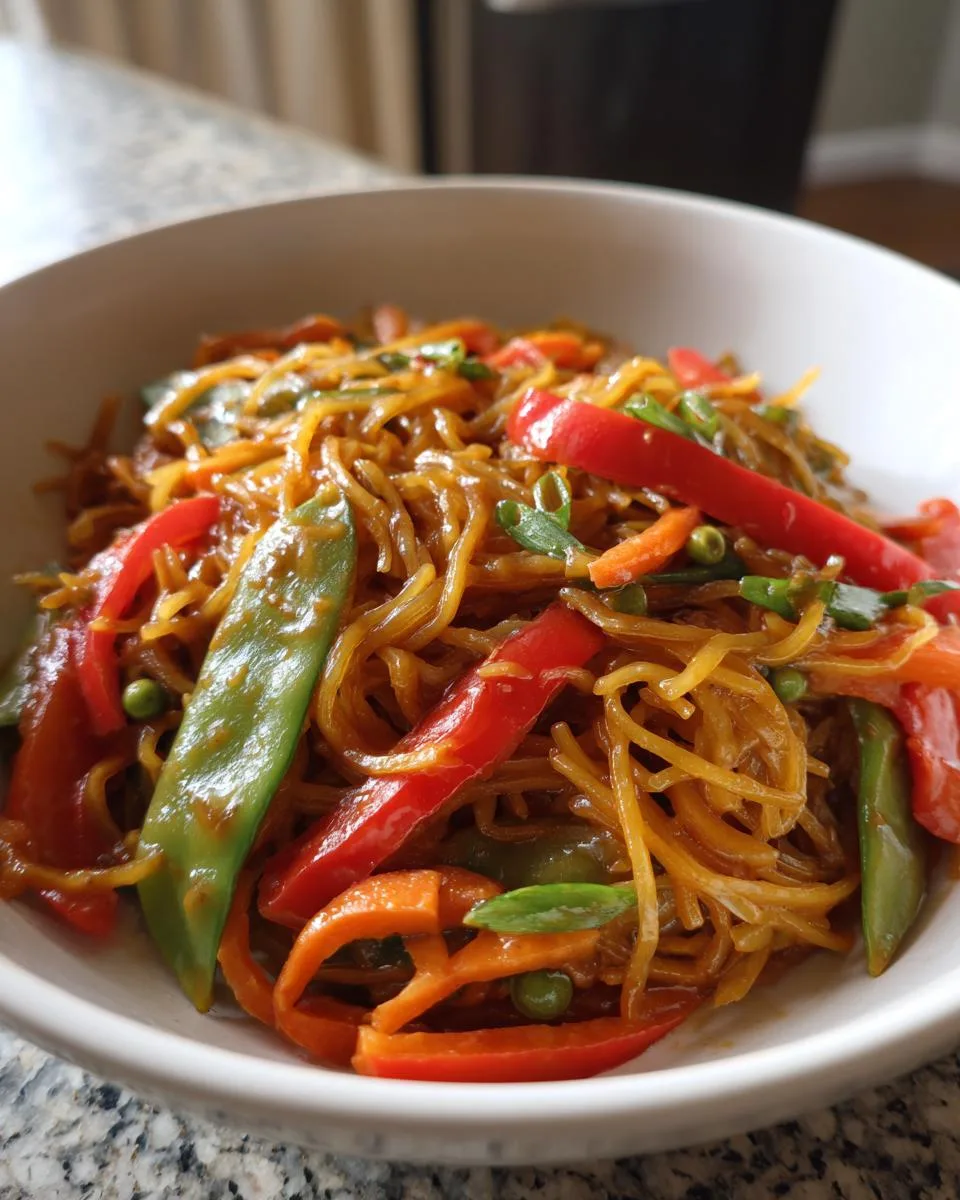
Table of Contents
Table of Contents
Why You’ll Love This Spaghetti Squash Chow Mein
Trust me, this isn’t just another healthy recipe—it’s a game changer. Here’s why it’s become a staple in my kitchen:
- Healthy swap that actually satisfies: All the rich flavors of takeout chow mein with a fraction of the carbs (and way more veggies!).
- Weeknight easy: From oven to table in about an hour, with most hands-off cooking time.
- Kid-approved magic: My picky eaters gobble up those “squash noodles” without a second glance.
- Endlessly adaptable: Swap in whatever veggies you have or add protein like tofu or chicken.
Ingredients for Spaghetti Squash Chow Mein
Here’s everything you’ll need to make this veggie-packed dish sing. I’ve grouped them so you can grab items as you go – no frantic pantry digging mid-recipe!
For the squash base:
- 1 spaghetti squash (about 3lbs) – look for one that feels heavy for its size
- 1 tablespoon olive oil – just enough to lightly coat the baking sheet
Fresh veggie mix:
- 1 small onion, diced (red or yellow both work great)
- 4 garlic cloves, minced – trust me, you’ll want every bit of this flavor
- 1 red bell pepper, thinly sliced into strips
- 1 cup sliced snow peas – those crunchy bites are my favorite part!
- 1 large carrot, julienned or grated – I use the big holes on my box grater
The magic sauce:
- 2 tablespoons soy sauce (use tamari if you need gluten-free)
- 2 teaspoons rice vinegar – that tang makes all the difference
- 1 tablespoon oyster sauce (hoisin works perfectly for vegetarians)
Bonus flavor boosters: Fresh cilantro for garnish, chili garlic sauce if you like heat, and don’t forget salt & pepper to taste!
How to Make Spaghetti Squash Chow Mein
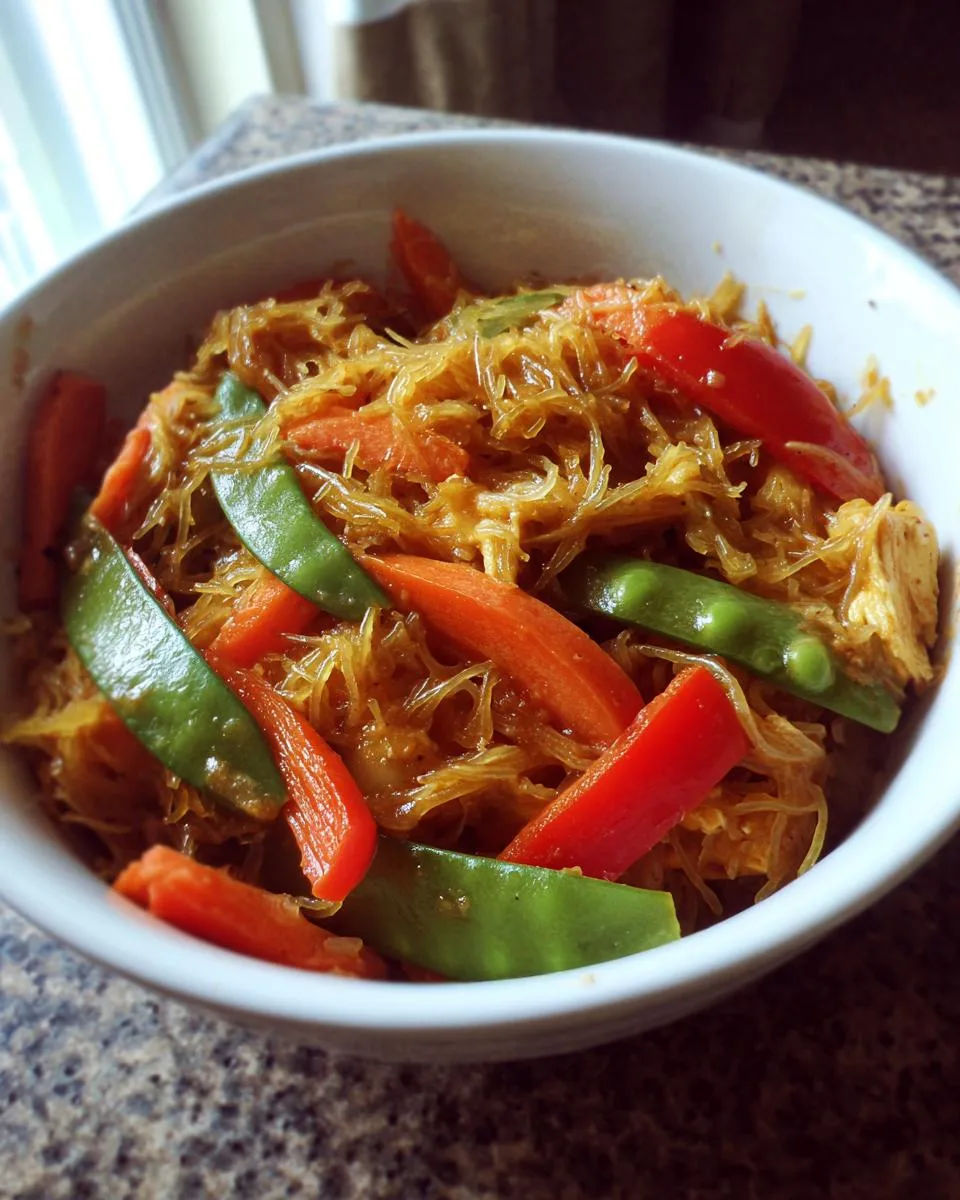
Okay, let’s get cooking! This comes together faster than you’d think, especially if you multitask while the squash bakes. Here’s exactly how I do it:
Baking the Spaghetti Squash
First, preheat your oven to 375°F and lightly oil a baking sheet. Now, the trickiest part – cutting the squash. I lay a kitchen towel underneath to keep it steady, then carefully slice it lengthwise. Scoop out those seeds (save them for roasting if you’re feeling fancy!), and place the halves cut-side down on the sheet. Bake for about 45 minutes – you’ll know it’s ready when the flesh pulls apart easily with a fork.
Preparing the Sauce
While the squash bakes, whisk together the soy sauce, rice vinegar, and oyster (or hoisin) sauce in a small bowl. So simple, but this combo gives that classic chow mein flavor we all love.
Sautéing the Vegetables
Heat oil in a large skillet over medium-high. Add onions and garlic first – that aroma means you’re doing it right! After about a minute, toss in the bell pepper, snow peas, and carrots. Just 2 minutes of cooking keeps them crisp-tender – we’re not making mush here!
Combining Everything
Now the fun part! Use a fork to scrape those gorgeous spaghetti strands from the squash into the skillet. Pour the sauce over everything and gently toss until the squash is evenly coated. Heat it through for just about a minute – any longer and the squash will lose its perfect texture. Taste and adjust seasoning, then serve immediately!
Print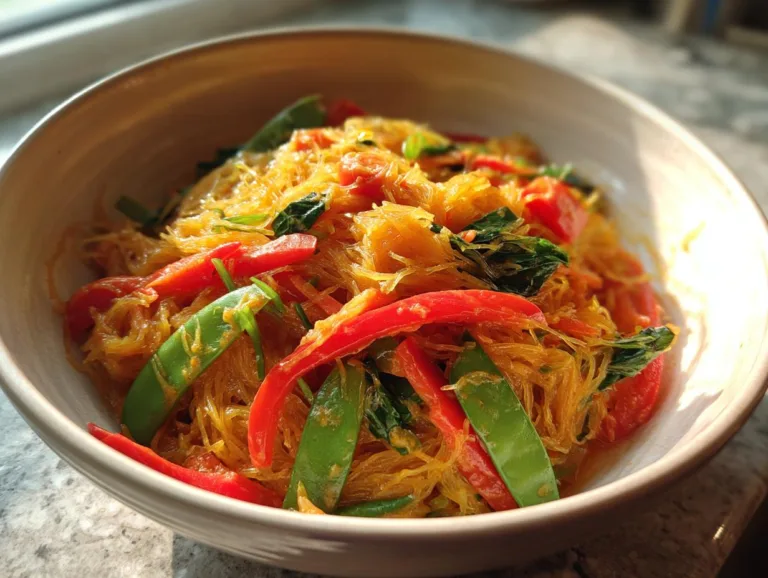
Healthy Spaghetti Squash Chow Mein in Just 45 Minutes
A healthy, low-carb twist on classic chow mein using spaghetti squash as noodles. Packed with fresh vegetables and a savory sauce, this dish is quick, easy, and family-friendly.
- Total Time: 65 minutes
- Yield: 4 servings 1x
Ingredients
- 1 Spaghetti Squash (~3lbs or 1365g)
- 1 Tablespoon (15 ml) Olive Oil (for oiling the sheet pan)
- 1 tablespoon (15 ml) olive oil, grape seed oil or any cooking oil (for sautéing)
- 1 small onion, diced
- 4 cloves garlic, minced
- 1 red bell pepper, thin sliced
- 1 cup (100 g) sliced snow peas or sugar snap peas
- 1 large carrot, julienned
- Kosher salt or sea salt, to taste
- Fresh cracked black pepper, to taste
- 1/4 cup (60 ml) chopped cilantro (optional)
- Chili garlic sauce, sriracha or hot sauce (optional)
- 2 tablespoons (30 ml) soy sauce or low sodium soy sauce (use Tamari for gluten free)
- 2 teaspoons (10 ml) rice vinegar (or distilled white vinegar)
- 1 Tablespoon (15 ml) oyster sauce (or hoisin for vegetarian)
Instructions
- Preheat oven to 375°F. Oil a sheet pan with olive oil.
- Carefully cut spaghetti squash in half lengthwise. Scoop out the seeds and connecting strands, then place cut side down on the prepared sheet pan.
- Bake for 45 minutes, or until the squash flesh becomes tender and separates easily into strands with a fork.
- Finish by gently loosening and removing the “spaghetti strands” from the shells. Set aside.
- Make the sauce: In a medium bowl, combine soy sauce, vinegar, and oyster sauce (or hoisin for vegetarian). Set aside.
- Heat 1 tablespoon of olive oil (or other cooking oil) in a large skillet on medium high heat.
- Add onions and garlic, and cook until soft.
- Add red bell pepper, snow peas, and carrots. Cook until vegetables are tender, about 2 minutes.
- Add the spaghetti squash strands and the sauce. Stir everything in the pan until the squash is coated with the sauce.
- Cook for about another minute until the spaghetti squash is heated through. Do not overcook the squash or it will become mushy.
- Add additional salt and pepper, to taste.
- Garnish with cilantro and serve with hot sauce.
Notes
- Use hoisin sauce instead of oyster sauce for a vegetarian version.
- Adjust spice level with optional hot sauce.
- Store leftovers in an airtight container for up to 3 days.
- Prep Time: 15 minutes
- Cook Time: 50 minutes
- Category: Main Dish
- Method: Baking, Sautéing
- Cuisine: Asian-Inspired
- Diet: Vegetarian
Nutrition
- Serving Size: 1/4 recipe
- Calories: 180
- Sugar: 8g
- Sodium: 450mg
- Fat: 7g
- Saturated Fat: 1g
- Unsaturated Fat: 5g
- Trans Fat: 0g
- Carbohydrates: 25g
- Fiber: 6g
- Protein: 4g
- Cholesterol: 0mg
Tips for Perfect Spaghetti Squash Chow Mein
After making this dish dozens of times (and learning from my mistakes!), here are my can’t-miss tips:
- Watch that squash like a hawk: Overcooked squash turns mushy fast. Test at 40 minutes—it should shred easily but still have some bite.
- Fresh is best for veggies: Those crisp snow peas and carrots make the texture. Frozen works in a pinch, but they’ll release more water.
- Heat to your taste: Start with just a drizzle of sriracha—you can always add more at the table!
- Work fast at the end: Once you add the sauce, keep the skillet moving to coat everything evenly without overcooking.
Spaghetti Squash Chow Mein Variations
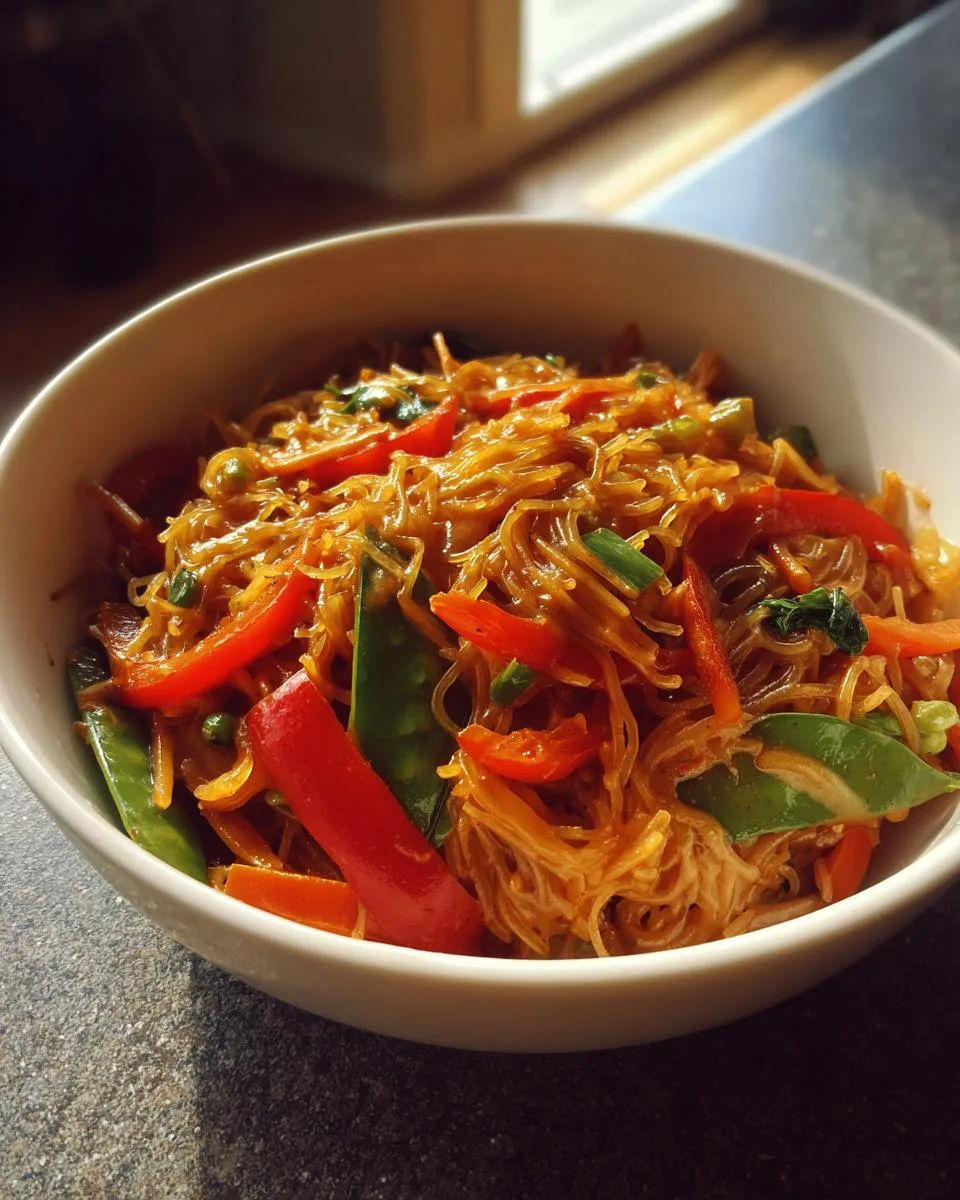
The beauty of this dish? It practically begs to be customized! Here are some of my favorite tweaks:
- Protein boost: Add cubed tofu (press it first!) or shredded chicken in the last 2 minutes of cooking.
- Veggie swap: Try broccoli florets, mushrooms, or even thinly sliced cabbage – whatever’s in your crisper drawer!
- Gluten-free: Simply use tamari instead of regular soy sauce – the flavor difference is barely noticeable.
- Extra crunch: Top with chopped peanuts or sesame seeds right before serving.
Serving Suggestions
This chow mein shines all on its own, but I love piling it high with fresh cilantro and a drizzle of sriracha for kick. If you’re feeding big appetites, steam some jasmine rice on the side – the fluffy grains soak up that delicious sauce beautifully!
If you’re into low-carb comfort food, this Keto Spaghetti Squash Carbonara is the perfect creamy alternative to traditional pasta.
Storage & Reheating
Leftovers? No problem! Toss them in an airtight container—they’ll keep happily in the fridge for about 3 days. When you’re ready to eat, reheat gently in a skillet over medium heat. Microwaving works in a pinch, but the skillet helps keep that perfect texture so your “noodles” don’t turn soggy. Pro tip: Add a splash of water or soy sauce when reheating to bring the flavors back to life!
Try the Cottage Cheese Spaghetti Squash Casserole for another cheesy, veggie-packed way to use spaghetti squash.
Nutritional Information
Let’s talk numbers – because knowing what’s in your food matters! This spaghetti squash chow mein packs serious nutrition without skimping on flavor. Important note: These are estimates – actual counts can vary based on your exact ingredients and brands used. But per generous serving, you’re looking at:
- 180 calories – way lighter than takeout!
- 7g fat (mostly the good kind from olive oil)
- 25g carbs with a solid 6g fiber – thank you, veggies!
- 4g protein – add tofu or chicken for an extra boost
All while delivering a rainbow of vitamins from those fresh vegetables. Now that’s what I call eating well!
FAQs
Can I freeze leftovers?
Oh honey, I learned this the hard way – spaghetti squash turns into a watery mess when frozen! Those lovely strands lose their texture completely. Stick to fridge storage for 3 days max. If you must prep ahead, keep the baked squash separate from sauce/veggies and combine fresh.
Is this recipe gluten-free?
Absolutely! Just swap regular soy sauce for tamari (my gluten-free friends swear by it). The flavor difference is minimal, and you’ll still get that signature umami kick. Check labels on oyster sauce too – some brands sneak in wheat.
My squash is hard to cut – help!
Microwave it whole for 2 minutes first – softens the skin just enough. Or (my lazy trick) roast it whole at 400°F for 20 minutes before halving. Either way, use a sharp chef’s knife and go slow!
Can I use pre-spiralized squash?
Store-bought works in a pinch, but fresh-baked tastes better and holds sauce beautifully. Pre-cut tends to be watery – if you go this route, pat it dry thoroughly before adding to the skillet.
Final Thoughts
There you have it – my foolproof way to satisfy those chow mein cravings without the carb crash! Give it a try this week and let me know how your family likes it. Snap a pic and tag me – I live for your kitchen success stories! I live for your kitchen success stories!